YASHICA 16mm CAMERAS
The Atoron is often listed as a 16mm camera. It's even been listed as a 110 camera. In reality, it uses Minox-sized film, so see the Minox section.
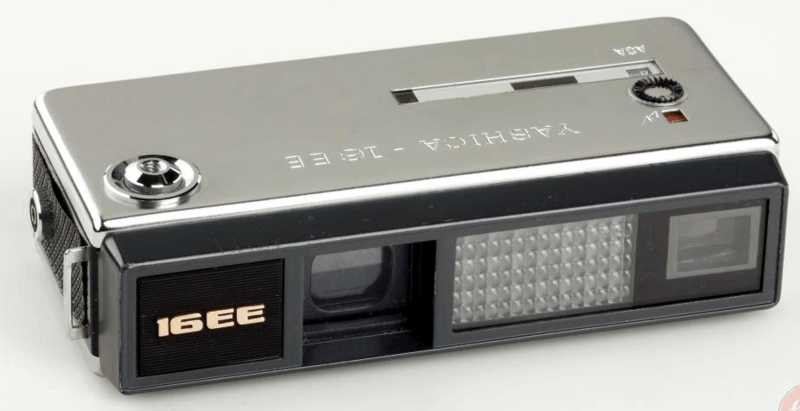
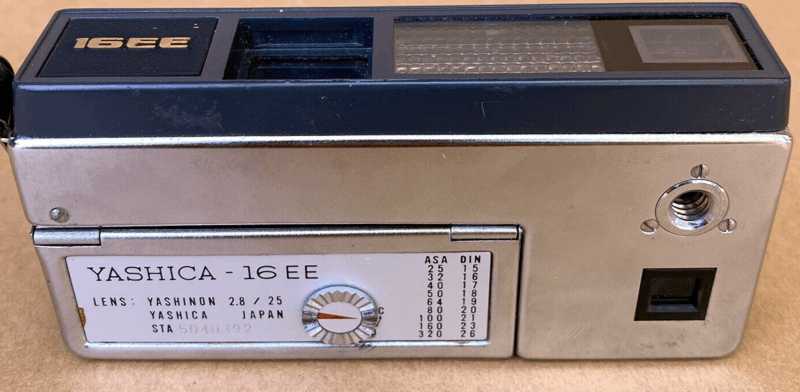
(1964) -- Fixed-focus 25mm (f2.8-16) lens. Very similar in appearance, size and features to the Minolta 16EE -- which came out two years earlier. Perhaps this is the reason it failed to sell well. Like the Minolta EE, a built-in selenium meter sets the correct exposure. Fully automatic exposure control from ISO 25 - 320 -- just dial in the film speed and the exposure is automatically set. An exposure window on the top of the camera shows "correct exposure", "over exposure", or under exposure". In fact, it was a more mechanically-sophisticated camera than the Minolta 16EE since the meter set the correct aperture AND the shutter speed (the Minolta meter just set the aperture). Shutter speed range is from 1/30 - 1/250. For flash use, the aperture could be manually set and the shutter speed would automatically be set to 1/30 -- another improvement over the Minolta 16EE -- and just the ticket for low-light use. Another very nice touch was the dual viewing system -- the camera had a normal eye-level viewfinder, but by flipping the camera over a built-in right-angle viewfinder could be used. Also built-in were a PC contact, tripod socket and cable release socket. Accessories included tripod, four filters, and a flash bulb "gun". Made by Yashica, not by Minolta, but it used the popular Minolta 16mm cassette. (For more information about these cassettes see the MINOLTA, KIEV, FR, YASHICA, VEGA 16mm CASSETTES page.) Because of this camera, Yashica turned out to be a major seller of "Minolta" cassettes. They are only slightly different from real Minolta cassettes (and in some ways better) and will work in any Minolta 16mm camera. (The Minolta cassettes will also work in the Yashica) They were sold in small yellow boxes that say "Magazine for Minolta 16". If you can't find the Yashica filters, the Minolta filters from the P or Ps cameras will fit (sort of).
Shortly after its introduction, Yashica modified the 16EE, ever so slightly. On the film door they added an ASA/DIN conversion table. No big deal, but a nice touch. This was the last of the Yashica 16mm cameras. When it failed to sell well, Yashica tried cameras using the Minox cassette (see the Yashica Atoron), this time with moderate success. All of Yashica's submini cameras are good performers and quality shooters.

To return to the main index for the Sub Club click here.
COPYRIGHT @ 1995-2021 by Joe McGloin. All Rights Reserved.