RICOH HALF FRAME CAMERAS
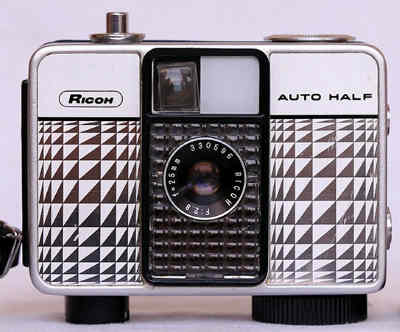
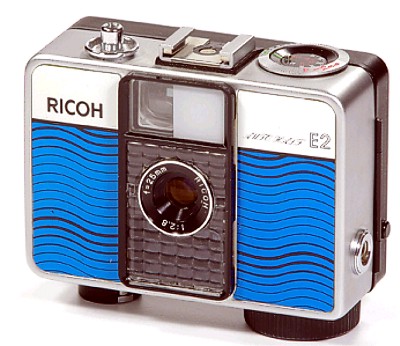
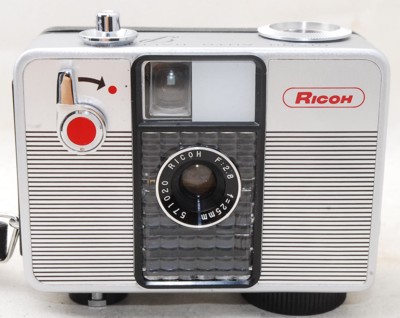
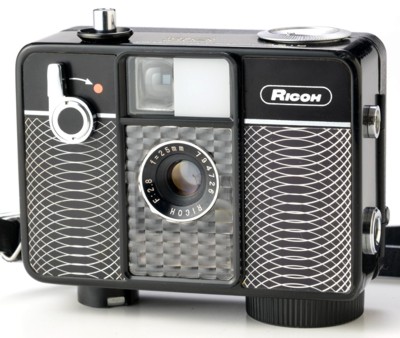
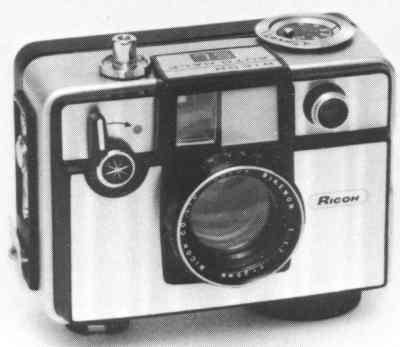
(1964) This is a slightly updated version of the Auto Half. All of the features are the same, except that the shutter release is now moved to the top of the camera and a cable release connection is added. It still had the same trusty 25mm (f2.8) fixed-focus lens with four elements in three groups. It still had two shutter speeds. The speed of 1/125 was used for regular photography while 1/30 was used for flash. For normal use, the built-in selenium meter -- same square design around the lens -- automatically controlled the aperture setting. ISO from 25 - 400. For flash use, the f-stop is set manually with a little f-stop dial on the top of the camera. This automatically sets the shutter speed to 1/30. The viewfinder had a special mark to aid in correct exposure settings. It is a dot right in the middle of the viewfinder which is normally yellowish -- meaning "adequate light". If it appears reddish, it means inadequate light -- use flash. Crude, but effective. Tripod socket and PC contact on the side. A cold flash shoe was available as an accessory and screwed into the tripod socket. The camera had a built-in spring motor for film advance. One wind of the spring advances 25-30 exposures. Another "improvement" was this model came with various flashy, colorful designs on the faceplate. There were so many styles that no camera shop would have been able to stock all of them.
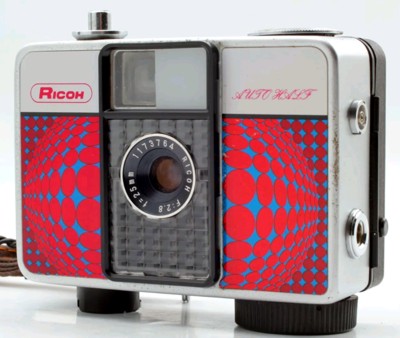
You can easily tell if you have this model because the shutter release is on the top of the camera, plus although
the faceplate of the camera just says "Ricoh Auto Half", but there is a big "E" on the top
of the camera. A flash and strange, rectangular filters that snapped on over the lens, meter and viewfinder were
available as accessories.
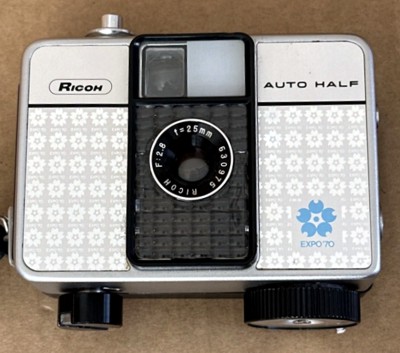
It's the same as the Auto Half E, except that it was made for the 1970 World's Fair -- called "EXPO 70" -- and held in Suita, Japan, near Osaka. The only difference is the addition of the official EXPO 70 insignia on the front.
Same as the Auto Half E except that they finally added a flash shoe to the top of the camera. You no longer had to buy an accessory adapter -- what took them so long?!
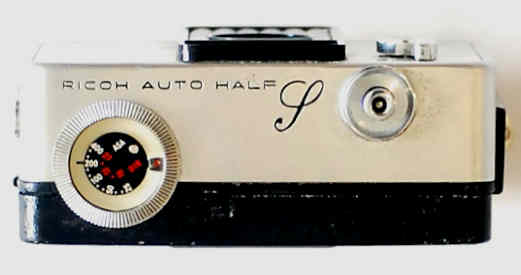
The Auto Half was not dead yet!. Ricoh came out with an updated version of the Auto Half E. This model has a self-timer added to the front of the camera, but the flash shoe was removed on this model. One step forward, one step back! Make that two steps back. For some reason, Ricoh added a BIG scripted "S" on the top, which looks like a "G", an "L", or a "P", depending on who you ask -- leading to a lot of confusion (see below). An accessory flash and strange, rectangular filters that snapped on over the lens, meter and viewfinder were available as accessories. Also sold as the Revue Auto Half S -- without any fancy inscription!
It's really just an Auto Half S (above) that some people think is a BIG scripted "G" on the top!
It's really just an Auto Half S (above) that some people think is a BIG scripted "P" on the top!
It's really just an Auto Half S (above) that some people think is a BIG scripted "L" on the top!
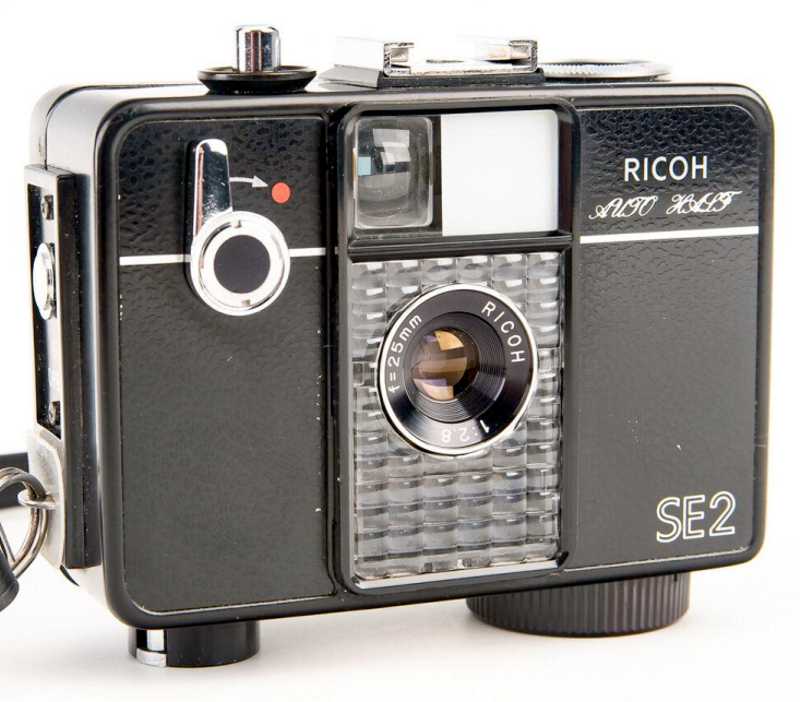
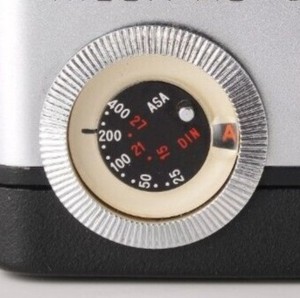
(1967) Ricoh came out with an updated version of the Auto Half S, but the changes are minor. First, the scripted "S" is gone, replaced with a very legible "SE" on the top. In addition, the flash/f-stop dial is changed -- slightly. Instead of the setting appearing in a tiny window (left), the whole scale is now visible (right) -- nice touch:
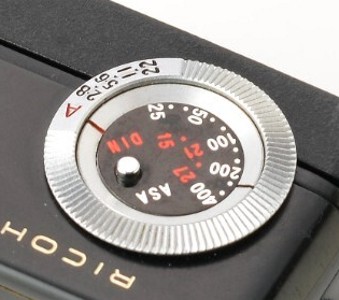
An updated version of the SE with the addition of a, much needed, hot shoe on the top of the body. Any hot shoe flash could be used, but the camera's exposure system was designed to be used with a flash that had a Guide Number (GN) of 16 (in meters). The f-stop dial (above, right) was modified so that on the opposite side of the dial from the f-stops, the correct distance would be displayed -- in meters as well. Just pick the f-stop you want to use, and it shows the camera to sibject distance -- or vice versa. Like the SE, it was available in chrome or black.
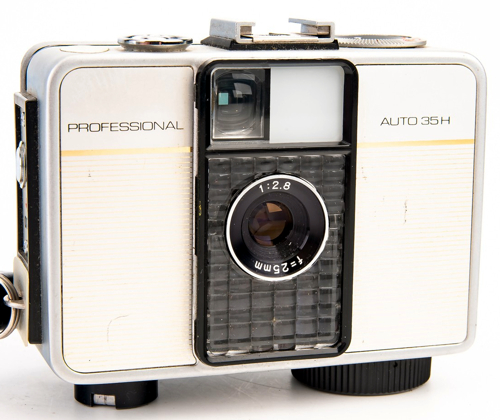
It's the same as the Auto Half SE2, but with a slightly different faceplate. More importantly, it dropped the self-timer. They did this because they knew that any professional photographer would have an assisstant, so there was no need for the seft timer.
(1970) This was basically the deluxe version of the Auto Half. It used the same body as the earlier models, but added some nice features. It had a focusing, 35mm (f1.7) lens (7 elements in 4 groups) with speeds of 1/30 - 1/250. Close focusing to 0.8 meters. The lens has a focusing scale on the lens marked with distance and idiot symbols. 30.5mm filter thread. Ricoh made UV, Y2 (yellow), Skylight (1A), and an ND4 filters. A CDS meter replaced the selenium meter of the other models. Exposure was similar to the other models, and designed to be automatic. The ISO film speed was dialed in (25 - 400), and the CDS meter set both the shutter speed AND the aperture. Since the camera now needed a battery, the camera had an OFF switch. The viewfinder had a special mark to aid in correct exposure settings, just like the SE. It is a dot right in the middle of the viewfinder which is normally yellowish -- meaning "adequate light". If it appears reddish, it means inadequate light -- use flash. Crude, but effective. For flash use, the f-stop could be set with a scale on the top of the camera, like the previous models. This sets the shutter speed to 1/30. It still had the spring drive which was good for 25 - 30 exposures. Built-in self-timer (probably the "S" in "SL"), PC contact, tripod socket, cable release socket, and shutter release lock (probably the "L" in "SL"). Available in chrome or black, both with stylish front plates -- just like the other models. Also sold as the Standard Gatling f1.7.
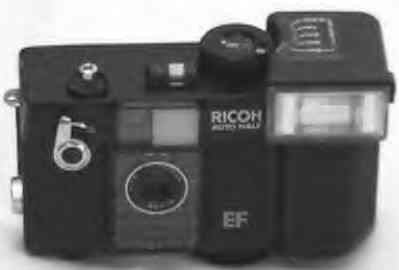
The Ricoh 25mm (f2.8) fixed-focus lens with four elements in three groups was back, this time in a camera with a built in flash. This camera was the same setup as the Auto Half E, but with a built-in flash. In non-flash mode, the shutter speed was 1/125 and the selenium cell selected the aperture. In flash mode, the shuuter speed was automatically set to 1/30 and the aperture was manually selected based on the distance and guide number. Built-in flash guide number of 12 (meters at ISO 100). The flash required two AA batteries for power. Built-in self-timer, tripod socket and cable release socket. The viewfinder had marks to indicate adequate light (yellow) or inadequate light (red) -- use flash. The camera had a built-in spring motor for film advance. One wind of the spring advances 25-30 exposures. With all these features -- in such a small package -- it's surprising that it wasn't a better seller. Strange, rectangular filters that snapped on over the lens, meter and viewfinder were available as accessories.
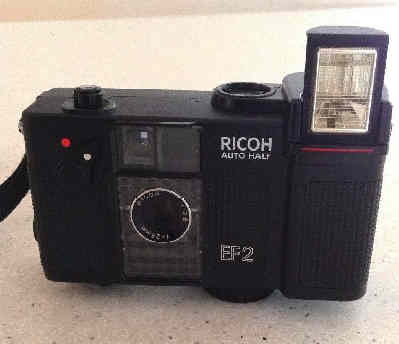
(1979) A slightly modified version of the Ricoh Half EF with a new, vertically-styled pop-up flash and several other, minor cosmetic changes. Obviously, it is slightly larger than its older brethen.
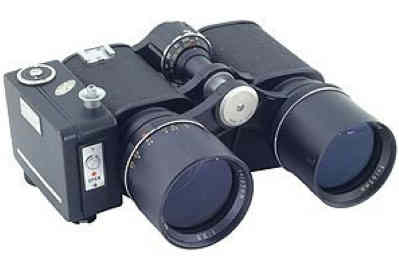
(1971) This is an example of how the Ricoh Auto Half was used. This was a pair of binoculars with a modified Auto Half E attached to right-hand side of the binocular lenses. The optic was a 165mm (f3.5), focusing binocular lens with dual diopter adjustment. A beam splitter in the binoculars diverts the image to the camera. The features of the camera were changed. The meter of the Auto Half is not used. The shutter speed was set manually -- 1/60, 1/125, or 1/250. Apertures were selected from f3.5 to f11 on the front of the right-hand lens. An exposure guide is on the back of the camera and an ASA/DIN reminder on the top. The camera has a cable release connection in the shutter release, and the tripod socket is moved to the bottom the right-handed lens. The motor drive remains the same. It is a modified version of the Nichiryo Nicnon TF-S of 1968 -- a cold shoe is added to the top ot the right-handed lens, but there is no PC connection. The reason for the shoe is for a meter! Ricoh sold an accessory spot meter that slid into the shoe and viewed the same angle as the binocular lens! Not to be confused with the Teleca 16mm camera by Toko which also was a binocular-style camera, but in 16mm format!
COPYRIGHT @ 1995-2026 by Joe McGloin. All Rights Reserved.